Vital Organizer
Dispatch, schedule, and route a contract workforce from one live map.
- Client
- Vital Catalyst
- Sector
- Field service and workforce operations
- Our role
- Full work order platform build, web and mobile
- Status
- Live in production
The brief
What was breaking
Scheduling a contract workforce onto a high volume of onsite jobs is a routing problem, a communication problem, and a motivation problem at the same time. Solving one without the others just moves the delay somewhere else.
- A large volume of onsite jobs was being scheduled without real-time visibility of where contract workers actually were.
- Dispatchers had no effective scheduling tools, so assignment decisions were made on stale information.
- Coordination between managers and workers in the field happened outside the system, so context was lost.
- Nothing in the process encouraged workers to close jobs on time rather than eventually.
What we built
The system we delivered
A live dispatch map
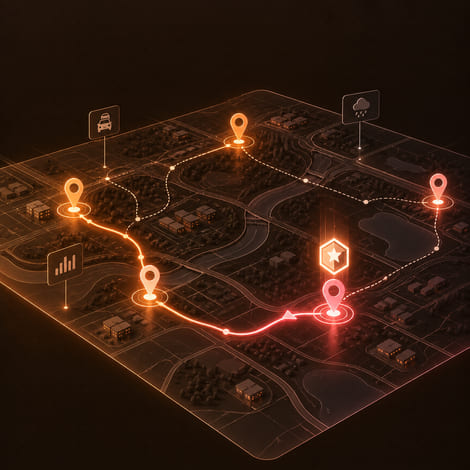
Managers see contract worker locations in real time alongside pending, today, later, past-due, and completed work orders, so assignment happens against current reality.
A dashboard for every worker
Each contract worker gets their own view of assigned jobs, schedules, and job details, so they are not waiting on a dispatcher to know what is next.
Traffic and weather in the planning view
Route planning accounts for live traffic and weather conditions, so schedules are built around the conditions crews will actually drive in.
Messaging inside the dispatch tool
Managers and workers communicate in the same place the job lives, which keeps the conversation attached to the work order.
Calendar and timeline scheduling
Work orders are scheduled across a team timeline by day, week, month, or agenda, with pending orders visible alongside the calendar.
Gamified completion incentives
A points and achievement layer rewards timely completion, adding a motivational pull that pure scheduling does not provide.
Built with
The stack behind it
The lead tier is what makes this system what it is. Everything under it is the platform that carries it.
Real time and routing
Platform
Engagement
Clients
What changed
The result in production
Dispatch decisions made on live information
Real-time worker positions replaced assumptions about who was closest and free.
Coordination that stays with the job
In-tool messaging meant problems in the field were resolved against the work order rather than over separate phone calls.
Routes planned around real conditions
Traffic and weather in the planning view cut the delays that come from scheduling as though every drive is clear.
Workers motivated to close on time
The gamification layer turned punctual completion into something visible and rewarded.
The screens
What it looks like in use
Same problem?
Let's scope what this would look like for you
Start with a two-week Discovery Sprint. We map your highest-value workflows and deliver a prioritised pilot roadmap grounded in what we have already shipped.